
Sustainability Buzzwords in the Glass Industry & What They Actually Mean

Blog written by Stuart Alexander
 
Sustainability in the glass industry has developed its own vocabulary. The difficulty is not in hearing these terms; but in understanding what they genuinely mean in operational and technical terms.

Take “circular economy.” At its core, this describes a shift away from the traditional “take–make–waste” model towards keeping materials in continuous use. In many industries this remains aspirational, but for glass it is already established practice. Glass can be recycled indefinitely without degradation, making it one of the few truly circular packaging materials.

Delivering Value Sustainably

Experts in Glass

We are experts in glass packaging, supporting our customers with over 100 years of joint company experience, with a genuine focus on providing industry best standards of product and service.

Stuart Alexander heads up our technical and quality department, providing a wealth of glass production experience and expertise gained over many years. Stuart is always on hand to offer support and advice and to answer any questions you may have.
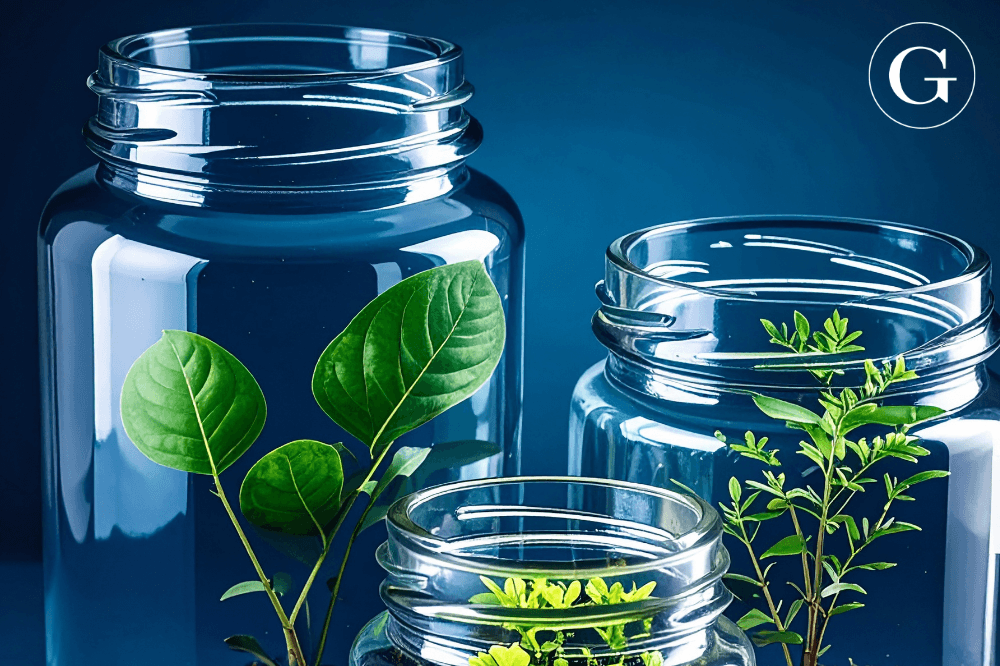
Closely related is “closed-loop recycling.” This refers specifically to reintroducing recycled glass (cullet) back into the same product stream, bottle to bottle, jar to jar. The technical advantage is clear: cullet has a lower melting point than virgin raw materials, which reduces furnace energy demand, cuts CO₂ emissions, and lowers overall raw material consumption.

“Cullet optimisation” or “increased cullet rates” is less a buzzword and more a critical performance indicator. Increasing cullet content delivers direct environmental and cost benefits. However, the limiting factor is not intent but the consistent availability of high-quality cullet, free from contamination.

“Decarbonisation” is another widely used term, but in glass manufacturing it has a very specific meaning. It involves addressing both combustion emissions from fuels and process emissions from raw material decomposition. Technologies such as electrification, hydrogen firing, and hybrid furnaces are progressing, though each presents commercial and infrastructural challenges.
“Lightweighting” is one of the more practical approaches. Reducing container mass lowers energy use across melting, forming, and transport. The technical balance lies in maintaining mechanical strength and performance, particularly through filling lines and distribution.

“Net zero” sits at a higher, system-level perspective; balancing total emissions with those removed or offset. Achieving this requires a combination of improved efficiency, alternative energy sources, and material optimisation.

Finally, “sustainable packaging” often acts as a catch-all term. In reality, for glass it can be distilled into three measurable factors: recyclability, recycled content, and production emissions.

The fundamentals remain consistent: maximise cullet, minimise energy, and reduce emissions. The real challenge lies in execution at scale.

At Glassworks International, sustainability is treated as a qualification, not a claim. By working with a carefully selected network of supply partners who demonstrate measurable progress in emissions reduction, energy efficiency, and circularity, Glassworks International ensures that customers are not just buying glass; but sourcing it responsibly.
 
Contact us today to explore how Glassworks International can support your journey towards more sustainable, responsibly sourced glass packaging.

Glass Packaging Experts

Glassworks International has been supplying our many UK customers with the highest quality glass packaging, providing outstanding value and dedicated service, nationwide for 25 years.

Stuart Alexander heads up our technical and quality department, providing a wealth of glass production experience and expertise gained over many years. Stuart is always on hand to offer support and advice and to answer any questions you may have.

LATEST NEWS

Stay up to Date

Glassworks International takes pride in keeping up to date with the latest technologies and trends within glass manufacturing and production.