

Glass is one of the materials people have used for thousands of years. We use it to make all sorts of things, from jewellery to containers for food and beverages. Even though we see glass every day, it still has some secrets that scientists are trying to understand.
Did you know? The first time people made glass was over 4,000 years ago. People found glass in Mesopotamia and ancient Egypt. Early glass was often opaque and coloured. It was mainly used to make beads, small containers, and decorative objects rather than clear containers.
Glass is mostly made from silica. Silica is a type of sand that is found everywhere. When we heat up silica to a high temperature around 1,700 degrees it melts and turns into a liquid. When it cools down something strange happens. The tiny particles in the glass do not come together in a pattern like they do in other solids. Instead they freeze in a pattern.

Glassworks International has been supplying our many UK customers with the highest quality glass packaging, providing outstanding value and dedicated service, nationwide for 25 years.

Stuart Alexander heads up our technical and quality department, providing a wealth of glass production experience and expertise gained over many years. Stuart is always on hand to offer support and advice and to answer any questions you may have.
Because of the way the particles are arranged scientists call glass a solid. Some scientists even call it a “glass state” of matter. This means that glass is not really a solid or a liquid. It is something in between.
Glass is different from materials like salt or quartz. In these materials the particles are arranged in a pattern. In glass the particles are all mixed up like they are in a liquid. This is why glass does not melt at a temperature like other materials do. Instead it gets softer and softer as it gets hotter.
The way the particles are arranged in glass also makes it transparent. In materials the particles can scatter light and make it hard to see through. In glass the particles are arranged in a way that lets light pass through with little scattering. This is why we can see through glass.
If we make glass from silica, it is extremely transparent. It can even let in light. The glass we use for bottles and jars is not made from pure silica. It has ingredients like soda and limestone that make it easier to melt and more durable.
This type of glass is called soda-lime glass. It is the common type of glass that we use for packaging.
Around 90% of the world’s glass containers are made from soda-lime glass.
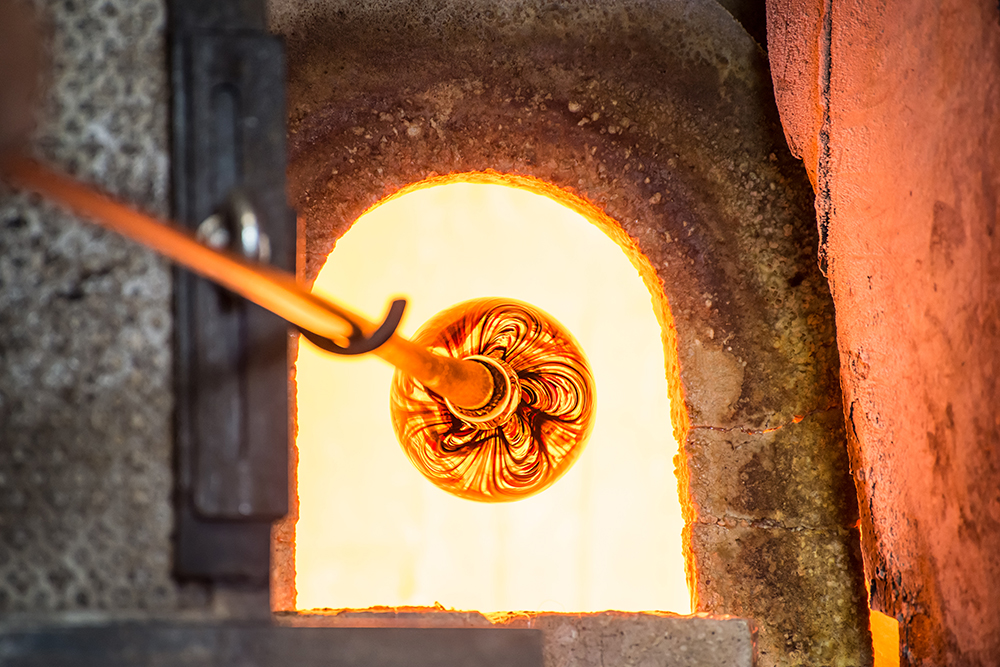
From a time ago, when people first made glass – to today when we make millions of glass containers every day; glass is still a very important material. The science of glass can seem a magical but getting the glass you need is actually quite simple. And while the science might sound complex, choosing the right glass packaging doesn’t have to be.
Glassworks International can help take the mystery out of glass, supplying high-quality containers perfectly suited to your product and purpose.
Interested in learning more about the science behind glass how it supports modern packaging? Contact the Glassworks International team today.
Glassworks International has been supplying our many UK customers with the highest quality glass packaging, providing outstanding value and dedicated service, nationwide for 25 years.
Stuart Alexander heads up our technical and quality department, providing a wealth of glass production experience and expertise gained over many years. Stuart is always on hand to offer support and advice and to answer any questions you may have.
Glassworks International takes pride in keeping up to date with the latest technologies and trends within glass manufacturing and production.