

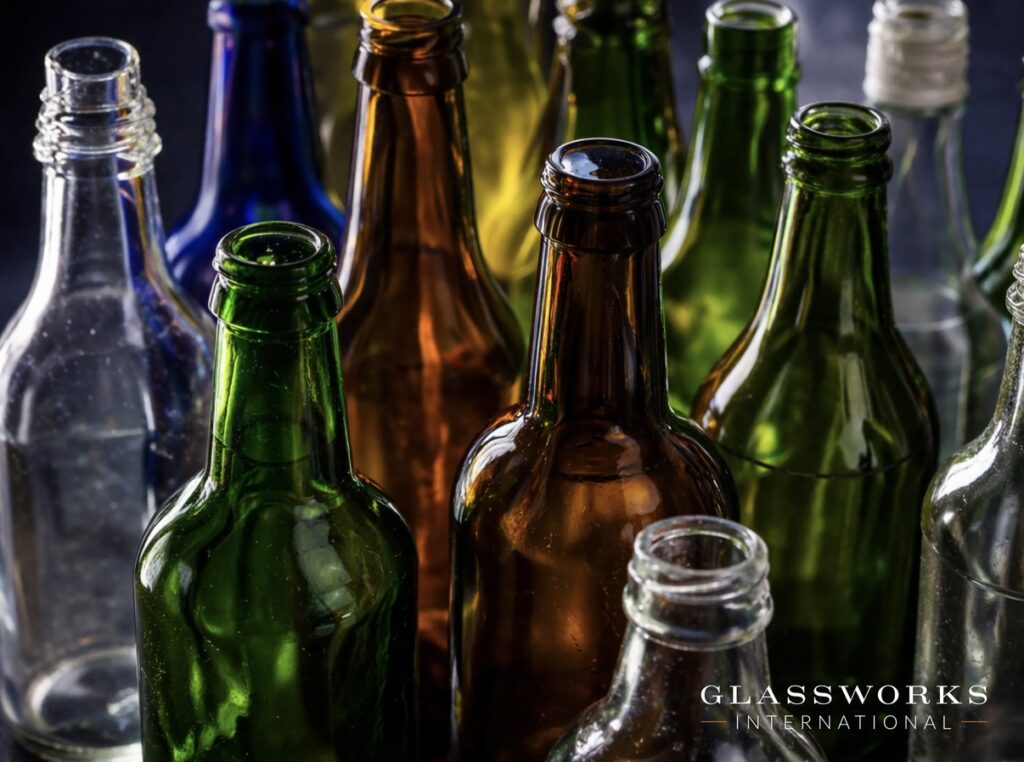
When walking down the beverage or food aisle, it’s easy to notice that many glass bottles are not completely clear. Beers are often packaged in brown bottles, wines frequently appear in green glass, and some food jars have a darker tint. These colours are not simply a design choice, they serve an important scientific purpose.
Glass used in packaging is typically soda-lime glass, made primarily from silica (sand), soda ash and limestone. By introducing small amounts of specific metal oxides during production, manufacturers can create a wide range of colours.

Glassworks International has been supplying our many UK customers with the highest quality glass packaging, providing outstanding value and dedicated service, nationwide for 25 years.

Stuart Alexander heads up our technical and quality department, providing a wealth of glass production experience and expertise gained over many years. Stuart is always on hand to offer support and advice and to answer any questions you may have.
Why does glass become coloured?
The colour of glass is determined by how added elements interact with light during and after the melting process.
For example, iron compounds are commonly responsible for the familiar green tint seen in many wine bottles. Iron naturally occurs in sand used for glassmaking and can produce green shades depending on its oxidation state.
Why can tiny amounts of material change the colour?
Even extremely small quantities of metal oxides, often measured in parts per million, can alter the way glass absorbs and transmits light, resulting in visible colour changes.
Brown or amber glass, widely used in the beer and pharmaceutical industries, is typically produced by adding a combination of iron, sulphur and carbon compounds during melting. These ingredients form chemical structures that strongly absorb certain wavelengths of light.
Other colours can be created using different additives. Chromium can enhance green tones, while cobalt produces deep blue glass. Although these colours may be visually distinctive, their primary role in food and beverage packaging is functional.
The key advantage of coloured glass is product protection.
Many beverages and foods are sensitive to ultraviolet (UV) and visible light, which can trigger chemical reactions that affect flavour, aroma, colour and nutritional quality. Beer is particularly vulnerable; exposure to light can cause compounds from hops to break down, producing an unpleasant flavour often referred to as “lightstruck” or “skunky”.
Why is amber glass often used for beer and pharmaceuticals?
Amber glass can block over 90% of harmful UV light, making it one of the most effective options for protecting light-sensitive products.
Green glass offers moderate protection while still allowing some product visibility, which is why it is commonly used for wine and certain beverages where both preservation and presentation are important.
Beyond protection, coloured glass also plays a role in branding and consumer perception. Distinctive glass colours can signal quality, tradition and authenticity, helping products stand out on crowded shelves.
From the chemistry that creates the colour to the protection it provides, coloured glass combines science with practical packaging benefits.
And when it comes to choosing the right glass container for your product, Glassworks International can help you find the ideal solution—supplying high-quality glass bottles and jars designed to protect, present and enhance your brand.
Glassworks International has been supplying our many UK customers with the highest quality glass packaging, providing outstanding value and dedicated service, nationwide for 25 years.
Stuart Alexander heads up our technical and quality department, providing a wealth of glass production experience and expertise gained over many years. Stuart is always on hand to offer support and advice and to answer any questions you may have.
Glassworks International takes pride in keeping up to date with the latest technologies and trends within glass manufacturing and production.